
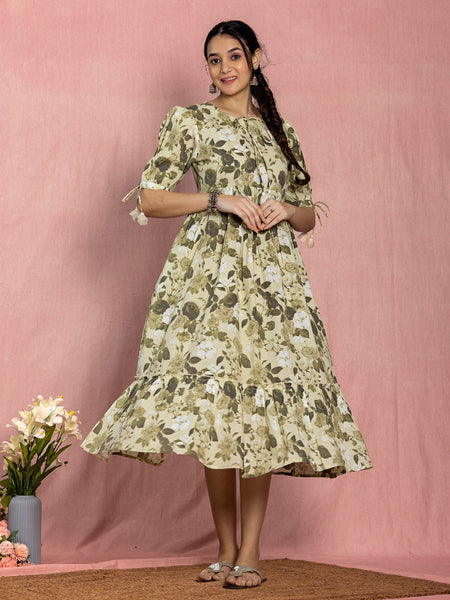
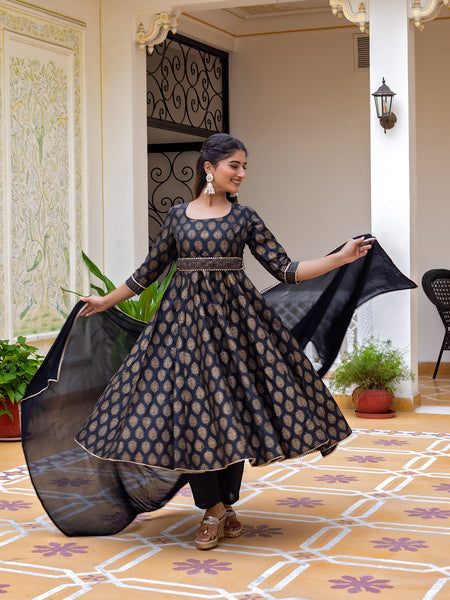
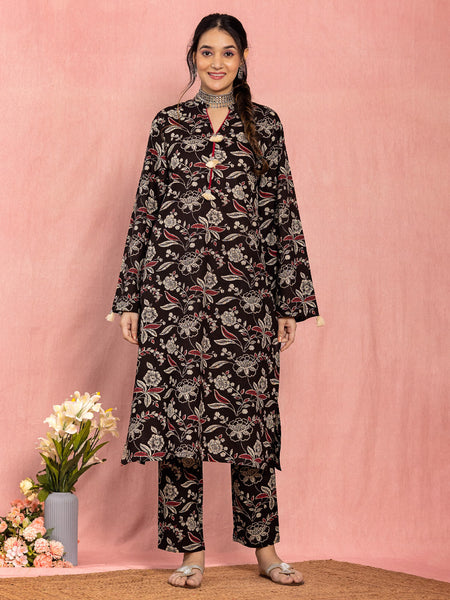
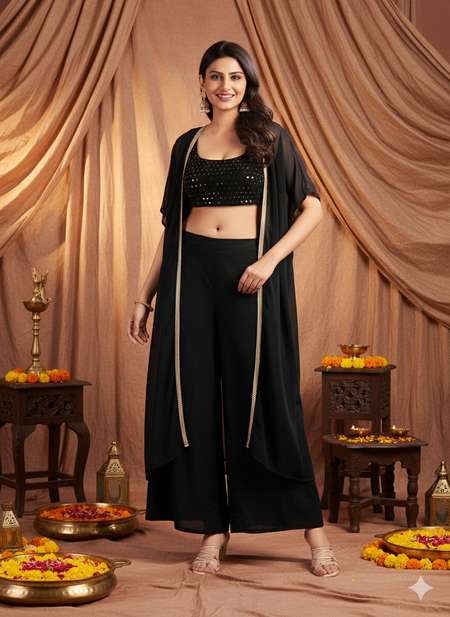

The Farshi Salwar trailed the floors of 17th-century Mughal courts. Three centuries later, it's the silhouette every woman is searching for. Here's why.
What is a Farshi Salwar?
The Farshi Salwar is a floor-grazing salwar with deep, sweeping volume — designed to trail the ground as you walk. The name comes from the Persian word farsh, meaning floor. Everything about the silhouette is built around that one detail: the hem that brushes the earth.
It originated in the Mughal courts of the 17th century, worn by women of the royal household and noble families. Unlike the slim-fit churidars and cigarette pants that dominated Indian wardrobes for the last two decades, the Farshi was designed for presence — wide at the hem, gathered at the waist, generous through the leg.

For most of the modern era, it sat quietly in archives and bridal catalogues. In 2026, it's everywhere.
Why the Farshi Salwar Is Trending in 2026
The Farshi's return isn't a styling decision. It's a shift in what women want from their clothes.
1. The Modern Maharani Aesthetic
Indian dressing in 2026 has moved away from minimalism and into what designers are calling Modern Maharani — the idea that you can look royal without looking heavy. The Farshi is the perfect vehicle for this. The volume itself is the statement. You don't need gota-patti or zardozi to make it feel important.
When Alia Bhatt wore an ivory Farshi by Torani earlier this year, the search interest spiked overnight. Khushi Kapoor, Karisma Kapoor, Yumna Zaidi, Hania Aamir — the silhouette has become the default for actresses who want drama without effort.
2. The Slow Fashion Movement
The Farshi belongs to a category of clothing that resists fast fashion by design. It's traditionally cut in mulmul, chanderi, organza, and cotton — fabrics that breathe, age well, and earn their place in a wardrobe over years.

Women who are tired of synthetic blends and seasonal turnover are choosing pieces with longer arcs. The Farshi fits that instinct. It's a silhouette you grow into, not out of.
3. Comfort That Looks Considered
The slim-fit era asked women to be smaller. The Farshi doesn't. It's loose at the leg, easy at the waist, generous through the body. You can sit cross-legged at a wedding. You can walk fast. You can eat a full meal without thinking about it.
That kind of ease used to come at the cost of looking polished. The Farshi proves it doesn't have to.
How to Style a Farshi Salwar
The 2026 Farshi is no longer just bridal. Women are wearing it in three distinct registers:
The Office Farshi
Solid, muted Farshis in sage, charcoal, ivory, and dusty rose — paired with a structured kurta or a plain cotton shirt. The volume reads as confidence, not occasion. Best for women in creative or leadership roles where the dress code rewards individuality.
The Jacket Combo
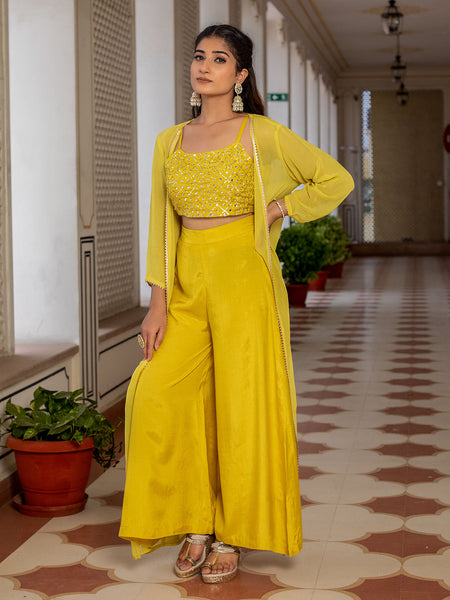
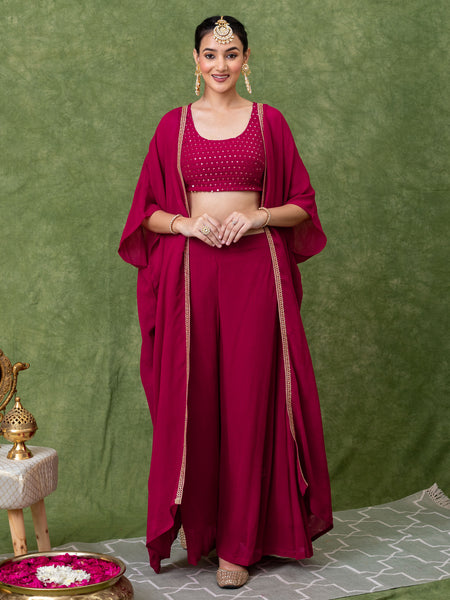
A flared Farshi with a cropped or short jacket on top — sherwani-style, bandhgala-style, or a simple Nehru-collar piece. The contrast between the volume below and the structure above creates the silhouette of the season. It works for engagements, family functions, and dressier evenings.
The Daily Farshi

Cotton Farshis in everyday prints — block prints, butis, small florals — paired with a simple kurti and a light dupatta. This is the version most women will wear most often. It's an everyday silhouette dressed up, not a wedding silhouette dressed down.
Farshi Salwar Fabric Guide
The fabric does most of the work in a Farshi. Volume only looks right if the cloth falls correctly.
- Mulmul cotton — Soft, breathable, falls beautifully. The most versatile fabric for daily wear Farshis.
- Chanderi — Slightly stiffer with a subtle sheen. Sits well for occasion wear.
- Organza — Sheer, structured, dramatic. Best for evening wear and festive moments.
- Cotton silk — A middle ground. Has the body of silk without the maintenance.
Avoid synthetic blends. The Farshi's volume only works when the fabric breathes — synthetics flatten the silhouette and trap heat.
Farshi Salwar vs. Sharara vs. Anarkali: What's the Difference?
The three silhouettes get conflated, but they're distinct:
- Farshi Salwar — Floor-length, gathered at the waist, voluminous through the leg, hem trails the ground. Origin: Mughal courts.
- Sharara — Wide-legged pants flared from the knee. Two-piece construction. Origin: Lucknowi nawabi culture.
- Anarkali — A long, flared kurta or frock with a fitted bodice. The fullness is in the kurta, not the bottom. Origin: Mughal-era performance dress.
The Farshi sits between the other two — the volume of an Anarkali moved to the bottom half, with a separate kurta on top.
The Farshi Was Always There
The Farshi Salwar didn't come back. It was always there — in old photographs, in bridal trousseaus, in the back of a grandmother's almirah. What changed is what women are willing to ask of their clothes.
For two decades, the answer was: make me look smaller. In 2026, the answer is closer to: let me take up space.
The Farshi was waiting for that question.
Frequently Asked Questions
What is the difference between a Farshi Salwar and a regular Salwar?
A regular salwar is fitted at the ankle with a tapered or gathered hem. A Farshi Salwar is floor-length and voluminous through the leg — the hem trails the ground rather than ending at the ankle. The trail is the defining feature.
What fabric is best for a Farshi Salwar?
Mulmul cotton for daily wear; chanderi or cotton silk for occasion wear; organza for evening events. Avoid synthetic blends — they flatten the volume and trap heat.
Can Farshi Salwars be worn daily?
Yes. Cotton Farshis in everyday prints — block prints, butis, small florals — work for office wear, errands, and casual evenings. The 2026 Farshi is no longer just bridal.
Are Farshi Salwars only for weddings?
No. While the silhouette originated in Mughal courts and has long been associated with bridal wear, the 2026 Farshi is being worn across registers — from offices to weekday afternoons. Fabric and styling determine the formality, not the silhouette itself.
The Kasya Farshi collection is here — heritage-rooted, daily-wearable, cut in pure cotton. Explore the Farshi collection →

