

The Farshi Salwar isn't just a wedding piece anymore. Five ways women are wearing it in 2026 — for the office, for evenings, and for ordinary Tuesdays.
The Farshi Has Outgrown the Wedding
For most of the last decade, a Farshi Salwar lived in one place: the back of a wedding wardrobe. You wore it once, photographed it from three angles, and folded it into tissue paper for the next big event.
That's changed. The 2026 Farshi is showing up in offices, at brunches, on weekday errands, and at evenings that don't require a reason. The volume that once felt occasion-only now reads as quiet confidence — provided you style it right.
Here are five ways women are wearing the Farshi Salwar this year.
1. The Office Farshi
The hardest version to pull off, and the most rewarding when you do. The trick is restraint.

Choose a Farshi in a solid, muted colour — sage, charcoal, ivory, dusty rose, deep indigo. Avoid prints, embroidery, or anything that catches light. Pair it with a clean, structured kurta in a complementary tone. Drop the dupatta. Add a slim leather belt at the waist if you want definition, or skip it entirely.
The volume on the bottom does the styling work. Your top half stays minimal. The result is a silhouette that reads as considered, not costumey — appropriate for client meetings, creative offices, and any workplace where the dress code rewards individuality over uniform. The trail forgives both tall and short heights, so this look works whether you're 5'2" or 5'10".
2. The Jacket Combo
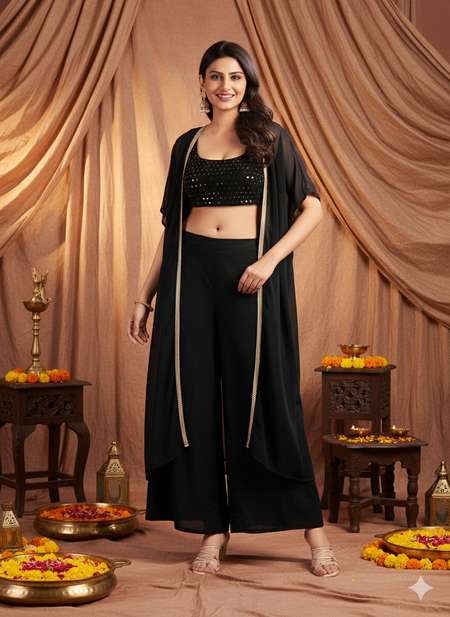
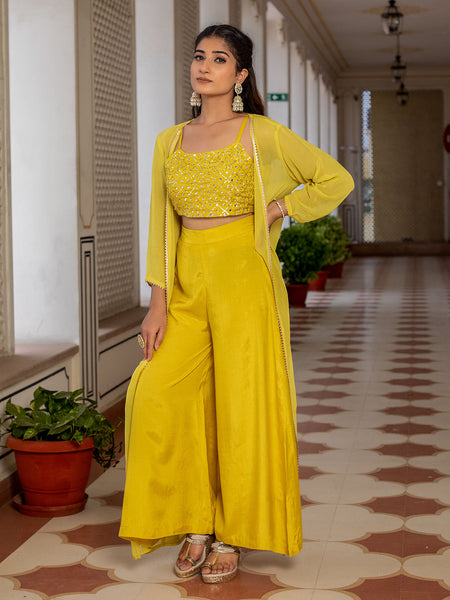
The most photographed Farshi look of the year. A flared Farshi paired with a structured short jacket on top — sherwani-style, bandhgala, or a simple Nehru-collar blazer.
The contrast is the point: volume below, structure above. The jacket should hit just above the hip, never longer. Anything longer drowns the silhouette. Stick to one print maximum — either the Farshi or the jacket, not both.
This works for engagements, anniversary dinners, family functions, and dressier evenings. It's also the easiest way to make a Farshi feel modern without losing its weight.
3. The Daily Farshi

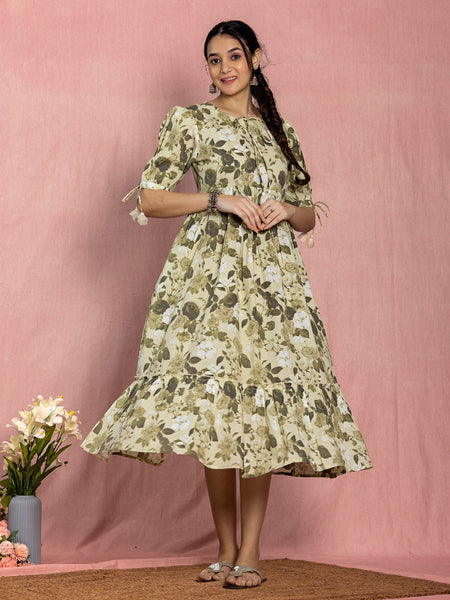
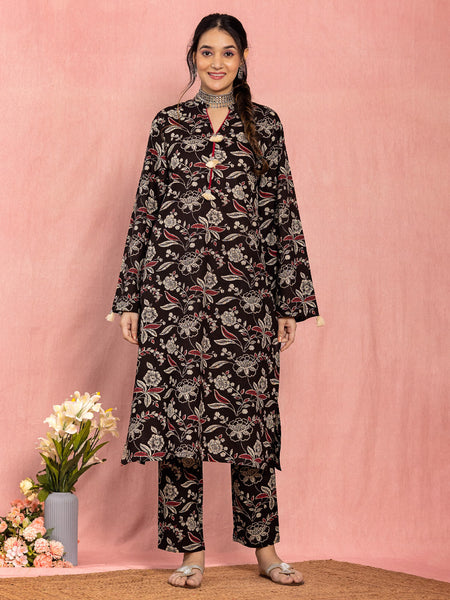
The version most women will wear most often. Cotton Farshi in an everyday print — block prints, small butis, scattered florals — paired with a simple kurti and a thin cotton dupatta.
The fabric matters here more than anywhere else. Choose mulmul or a soft cotton that falls without stiffness. Synthetic blends will flatten the silhouette and trap heat in summer. Match colour tones loosely; the goal is ease, not coordination.
Wear it to lunch. Wear it to drop your kids at school. Wear it on a Sunday morning at home. The Farshi doesn't need an occasion to earn its place.
4. The Evening Farshi
For dinners, intimate parties, and the kind of evenings where a saree feels like too much commitment.

Reach for a Farshi in chanderi, organza, or cotton silk — fabrics with a slight sheen that catches evening light. Solid colours work, but this is also where you can experiment with subtle tonal embroidery or small zari detailing along the hem.
Pair it with a fitted kurta or a sleeveless blouse. Add jhumkas, a small bindi, kohl. Skip the heavy jewellery — the Farshi is already doing the heavy lifting visually. Heels work; juttis work; flats work. The hem trails either way.
5. The Festive Farshi
The version closest to the Farshi's Mughal origins, but without the heaviness that made it feel dated.

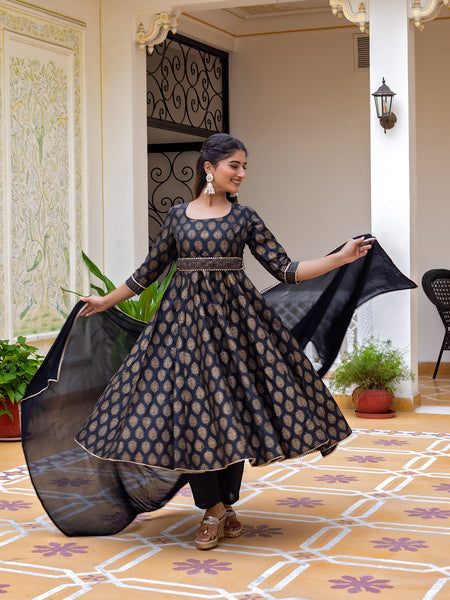
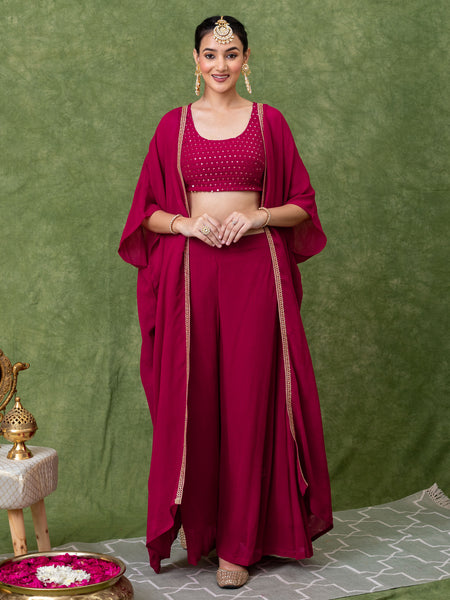
Choose richer tones — deep wine, emerald, ivory with gold, burnt orange. Look for hand-block prints or fine zari work along the hem. Pair with a longer kurta in a contrasting tone, layered with a dupatta you can drape across one shoulder or let fall behind you.
This is what to wear to Karva Chauth, Diwali parties, mehndi functions, and family pujas. It feels traditional without feeling costumey — which is the entire point of how women want to dress in 2026.
What Not to Do
A few things to avoid if you're new to the silhouette:
- Don't wear heels too high. The hem trails. High heels combined with floor-length volume become a tripping hazard. Mid-heel or flat is the move.
- Don't pair with a long kurta. The Farshi already carries volume below. A long kurta on top hides the silhouette and turns the look into an unbroken column. Cropped, hip-length, or fitted only.
- Don't overlayer the dupatta. One dupatta, draped simply. Anything more competes with the Farshi.
- Don't choose synthetic. The Farshi only falls correctly in natural fabrics. Polyester or rayon blends ruin the volume.
The Real Question
The reason the Farshi is everywhere in 2026 isn't because designers decided it would be. It's because women asked for clothes that hold space without demanding effort. The Farshi answers that question better than almost anything else in the ethnic wear vocabulary.
Wear it for occasions. Wear it for nothing. The hem still trails the floor.
Frequently Asked Questions
Can you wear a Farshi Salwar to the office?
Yes — choose a solid, muted Farshi in sage, charcoal, ivory, or dusty rose. Pair with a structured kurta and skip the dupatta. The volume reads as confidence when the rest of the styling stays minimal.
What top to pair with a Farshi Salwar?
A short or hip-length kurta, a fitted shirt, or a structured short jacket. Avoid long kurtas — they hide the silhouette. The Farshi already carries volume below; the top should stay clean.
Are Farshi Salwars suitable for short heights?
Yes. The trail forgives both tall and short heights. For petite frames, choose a Farshi that ends just at the floor (not significantly past it), pair with a fitted hip-length kurta, and avoid heavy dupattas that visually shorten the body.
What shoes work with a Farshi Salwar?
Mid-heel or flat. The hem trails — high heels combined with floor-length volume become a tripping hazard. Juttis, kolhapuris, mid-heel sandals, or block heels all work.
Discover Kasya's Farshi co-ord sets — heritage-rooted, daily-wearable, cut in pure cotton. Shop the Farshi collection →

